This Is What It Looks Like When Good Business Is the Mission.
"We aren't just selling coffee; we are proving that a brand can scale while shifting the balance of power back to the smallholders."
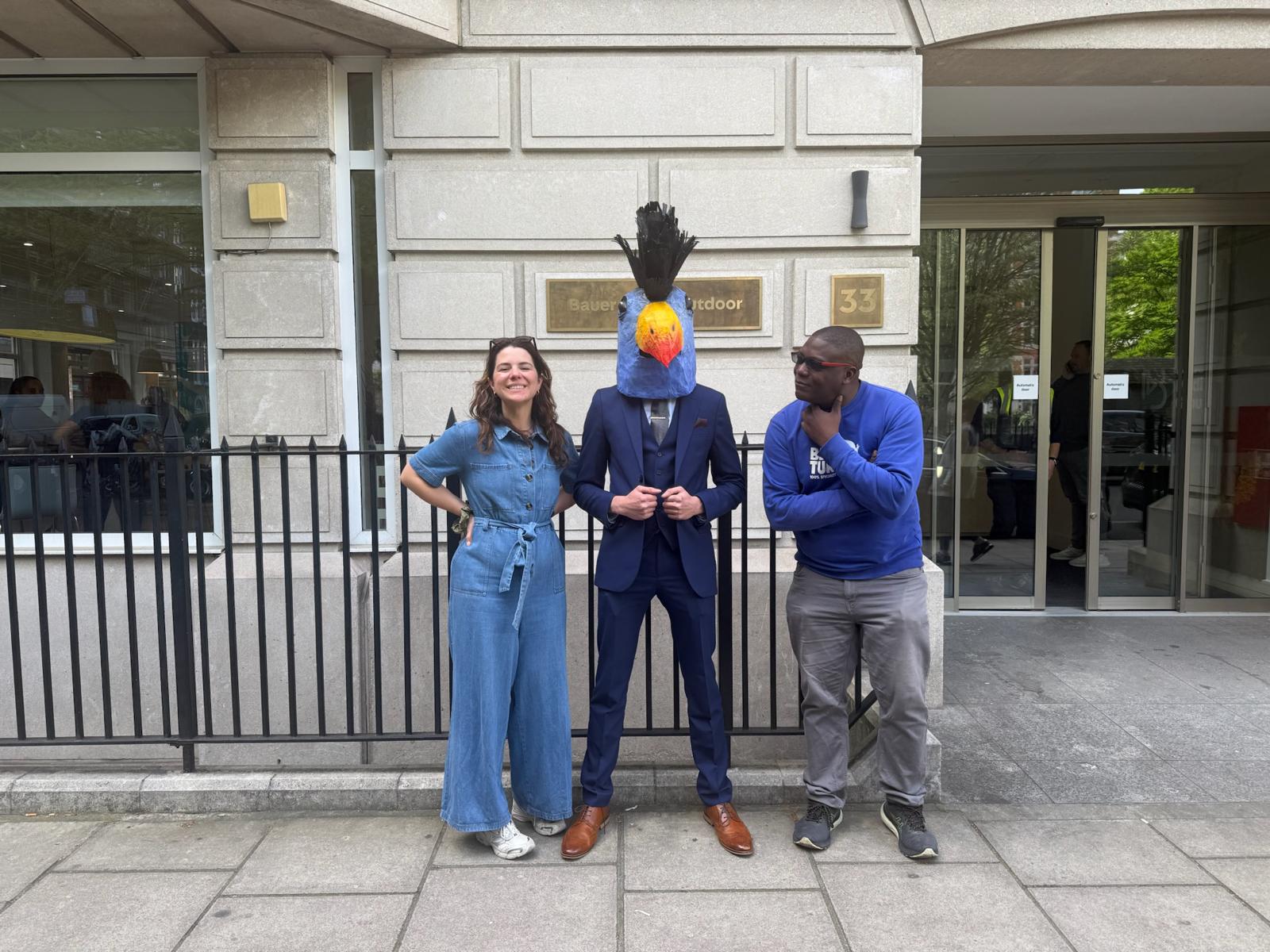
Rosie Long
Managing Director
at
Blue Turaco Coffee
Industry
Coffee
Rooted Purpose
We sat down with Rosie Long, Managing Director of Blue Turaco Coffee, to talk about what it takes to scale a farmer-owned coffee brand without losing sight of why it exists. Her job, in short, is to translate the vision of the company's founder, Wycliffe Sande, into a business that can hold its own on Britain's biggest shelves. But to understand how she balances commercial scale with deep-rooted purpose, you have to look past the retail metrics.
Because if you ask anyone what Blue Turaco Coffee is about, and they don't start with the product. They start with an eight year old boy in a Ugandan fishing village, going into the coffee trees before school.
That boy became the first person in his village to go to university. He eventually moved to London and one day went looking for Ugandan coffee in a British supermarket, There was none. Not a single bag. Uganda, one of the world's great coffee-producing nations, was completely absent from the shelves of a country that drinks 98 million cups a day.
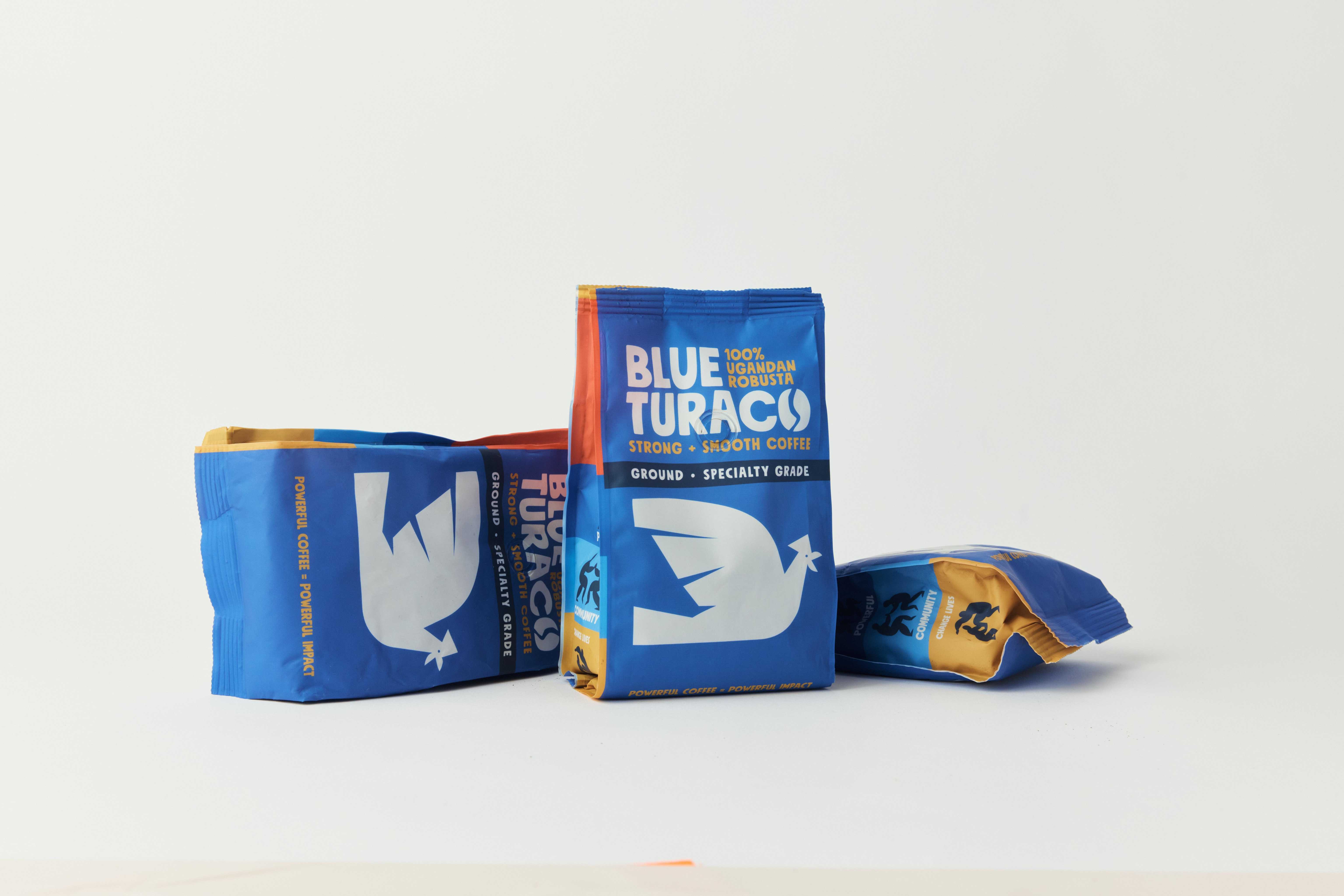
That absence became a mission. That mission became Blue Turaco Coffee, the UK's first smallholder farmer-owned coffee brand, now listed in Waitrose, Co-op, Tesco and Ocado. They pay farmers an average of 30% more than traditional trade routes, and fund two school meals in Ugandan farming communities with every pack sold.
"I was drawn to Blue Turaco because it's a business where commercial growth directly fuels human impact. We aren't just selling coffee; we are proving that a brand can scale while shifting the balance of power back to the smallholders. It makes me show up every day knowing that every single extra case we sell means more support for the communities growing our beans."
Robusta Revolution
The Coffee the Industry Overlooked
Uganda grows Robusta above all else, accounting for around 85% of its coffee exports. For decades Robusta played a supporting role in the industry, blended into commercial coffee to hit price points and rarely celebrated on the label in its own right.
It makes up 40% of the world's coffee supply. It grows hardier, higher in caffeine and across communities that have some of the least financial protection when global prices shift. However, the specialty coffee movement, with all its language of provenance and ethics, looked the other way.
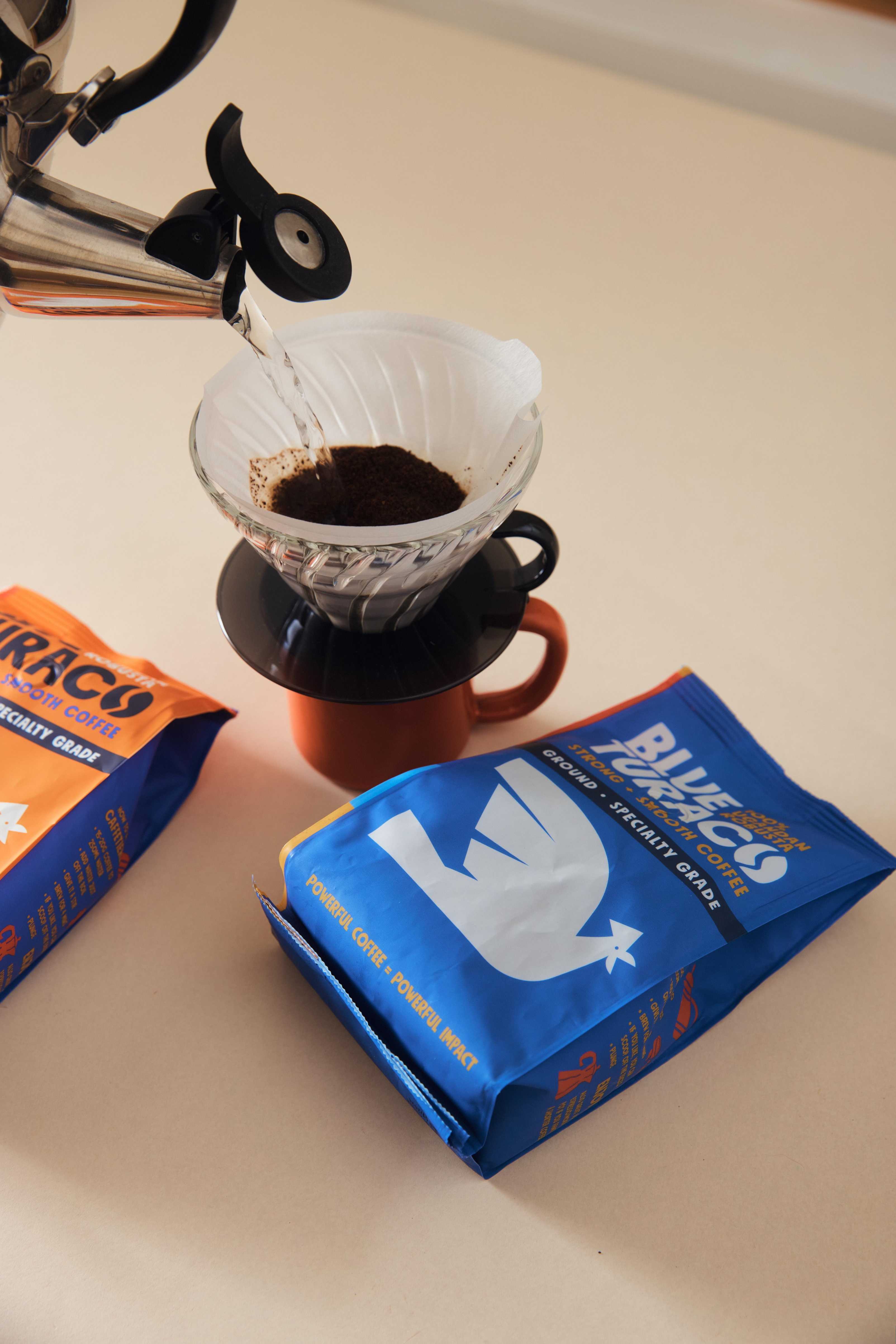
Blue Turaco is built on the conviction that this was wrong and needs correcting. Ugandan Robusta, grown carefully and roasted by people who understand it, is extraordinary. It deserves its own shelf space, front and centre, not dissolved into a blend. Getting the British consumer to see that took time, persistence, and a very good cup of coffee.
“All businesses are built on a little bit of luck - and the first buyer we spoke to at Waitrose has been in the hot bevs game for a long time, so she knew that Robusta had potential. Coffee is a hugely competitive category and we needed that USP to get our space on the shelf. In the last 3 years we have very slowly seen the narrative start to shift, we are seeing more speciality roasters adding a Robusta or a blend where they actually call it out on pack, but we’ve still got a big job to do getting these beans mainstream, and convincing the consumer “so what”. “
Shifting Power
What Paying Fairly Actually Looks Like
The word 'ethical' has been stretched thin in food and drink. It appears on packaging alongside stock photography of smiling farmers and means, in practice, very little.
Blue Turaco's version has a number attached to it: 30%.
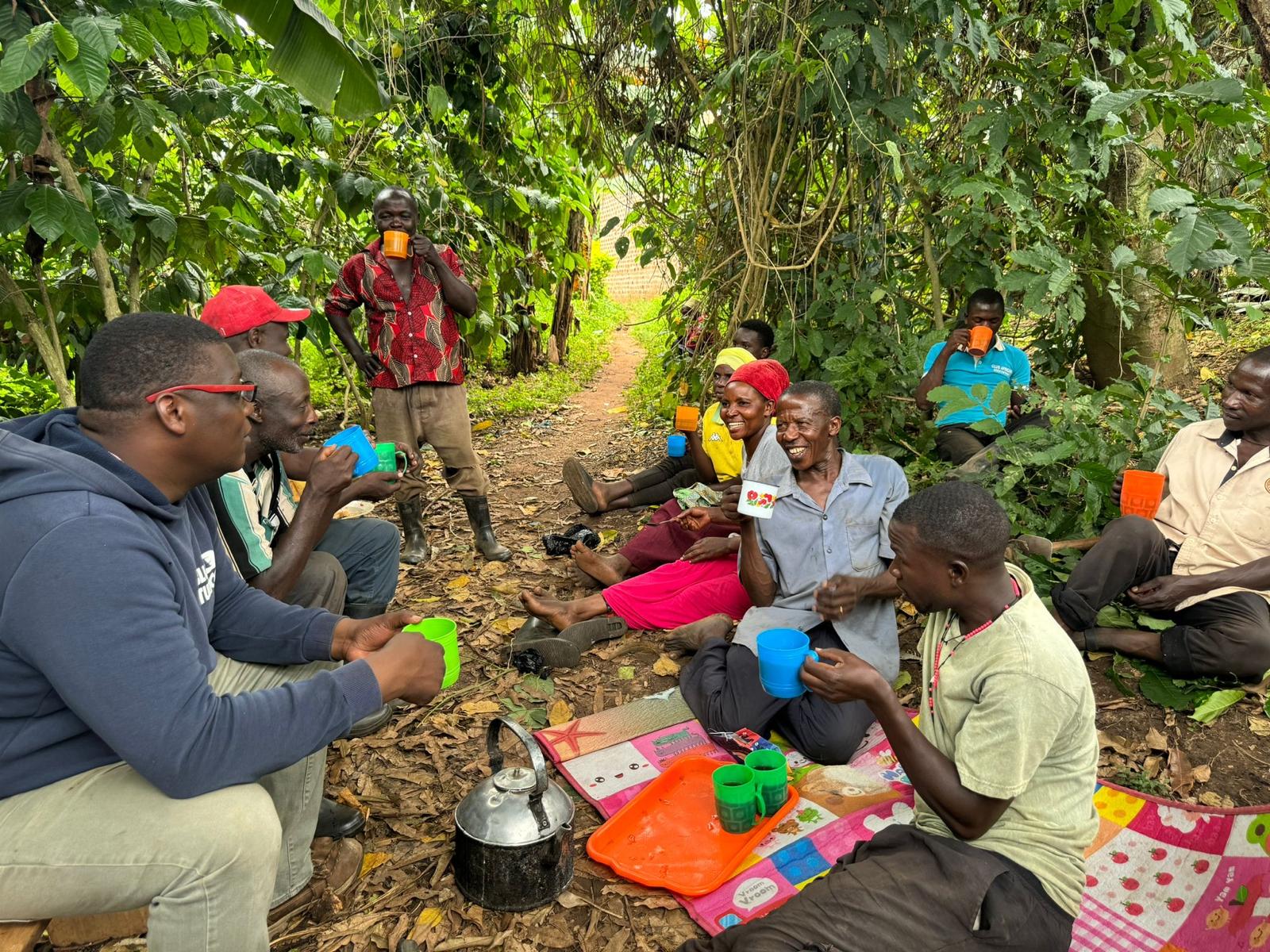
Buying directly from Ugandan smallholder farmers, cuts out up to five layers of middlemen. Blue Turaco pays farmers on average 30% more than the traditional trade route delivers. Wycliffe owns a farm in Uganda himself and works alongside fellow smallholders to improve their growing practices and the quality of their beans. He is not a Western brand manager who visited a farm once for a content shoot. He is a farmer who built a brand.
“These relationships are built on radical trust and stripping away the middle layers that traditionally exploit farmers. Paying 30% more changes lives on the ground. Seeing our coffee on a Waitrose shelf validates their incredible hard work and proves to them that Ugandan Robusta belongs on the world stage.”
Alongside the pricing sits something even more personal. Every pack sold funds two school lunches in the schools near where the coffee is grown, the same communities where children still go into the coffee gardens to help their families, just as Wycliffe once did. It is not a charity add-on bolted onto the business model. It is the reason the business model exists.
“In practice, it means children are in classrooms with full stomachs, ready to learn. By linking the meals directly to pack sales, our UK customers instantly know their morning routine is actively fueling an education. It makes impact tangible, scalable, and impossible to compromise.”
Scaling Safely
Finding a Lender That Shared the Mission
As Blue Turaco grew into national retail, it needed capital to move with it. Bigger purchase orders meant bigger procurement runs. A brand committed to paying farmers promptly and running a school meals programme cannot afford a lender who only looks at the numbers.
It needed one that understood what the numbers were for.
When Blue Turaco found Kikin, the fit wasn't just financial. Kikin plants trees to offset the carbon footprint of its lending activity, and actively offers reduced rates to businesses that are doing things the right way. Businesses with genuine sustainability commitments built into how they operate, not just what they say on their website.
For a brand whose entire existence is a bet that business can be a force for good in farming communities, that mattered. It meant the lender sitting behind Blue Turaco's growth shared something of the same belief, that how you make money is as important as how much of it you make.
“We want to be rewarded for doing good business, cash is king but access to cash is harder when you’re operating outside traditional systems - when you’re trying to change the system this automatically puts you on the outside.”
The practical result is that Blue Turaco can scale into new listings and grow its procurement without compromising the commitments upstream. The farmers stay paid. The lunches keep getting funded. The mission doesn't get deprioritised when the purchase orders get large.
The Woman Who Said It Wasn't Possible
When Wycliffe went back to Uganda to tell farming communities about his vision, Ugandan coffee on British supermarket shelves owned by the people who grew it, a woman stopped him.
"We have heard and we have listened," she told him. "But I don't believe it's possible. Because none like us have ever been able to do it."
He did not forget her. And he did not stop.
Blue Turaco Coffee now sits in more than 500 locations across the United Kingdom. The farmer network is growing from 100 to more than 250 smallholders. Children in Ugandan villages are eating school lunches funded by people in London and Edinburgh who chose one bag of coffee over another.
"I would want her to know that the impossible is sitting in over 500 stores across the UK right now. We've shown that a farmer-owned, direct-trade brand can earn a place alongside the biggest names in retail, and we're still at the beginning of what that could become"
The impact reports will come. The metrics will accumulate. But the real measure of Blue Turaco's success is simpler than any of that: whether a model built on fairness, to farmers, to communities, can compete at scale on Britain's biggest shelves and prove the whole industry has been thinking about this wrong.
Q&A
Rosie Long, , Managing Director, Blue Turaco Coffee
How do you translate Wycliffe’s founding vision into the realities of scaling a retail business?
Blue Turaco is fundamentally a vehicle for championing Robusta coffee, and championing coffee farmers - the louder we get, the easier it is for us to do this, so that’s what’s guiding our decision making.
Specialty Ugandan Robusta wasn't a category UK consumers were asking for. How do you build genuine demand for something people didn't know they were missing?
You stop hiding it in cheap commercial blends and start celebrating its unique strength and smoothness. We built demand by shifting the narrative, educating consumers on high-quality Robusta, and delivering an exceptional cup of coffee that speaks for itself.
What does it actually take to make sure farmers earn more as the business scales?
Our commitment is to support farmers to earn more from their crops - this isn’t just about what we pay but about changing industry perceptions of the value of Robusta and critically, trading as directly as possible to keep as much value as we can in the hands of the farmers. In the future, we hope this can go beyond coffee and farmers can earn from their farms overall, as well as creating more jobs throughout the coffee supply chain.
The school meals programme is tied directly to pack sales. How do you make sure it scales with the business and doesn't get quietly squeezed under commercial pressure?
We wanted this to be a clean, clear and scalable commitment for both customers and the balance sheet which is why we choose a cash payment rather than a % which is variable and can easily be eaten away at. We can use pack sales to easily share with our customers how much we’re investing.
You've talked about finding partners, suppliers, lenders and retailers, who share Blue Turaco's values. How do you test for that? What does values alignment actually look like in practice versus what companies just say?
Partnerships are critical to enabling our business, but we can’t simply operate within the system we’re trying to change. We look at innovative business and start ups across our ecosystem because we want to grow and learn together - we’re not perfect and we’re not looking for that either.
A lot of brands talk about ESG. Blue Turaco was built from it. What is the difference, and how do you spot the gap when you see it?
For us, it’s where we started and what our North Star is. Our founder will always be a farmer, and we will always be focused on “making coffee pay” for those at the heart of the industry. Outside that, there is so much more we want to do, whether it’s certification, packaging improvements, more projects in Uganda, but we can’t do everything especially at our size. This means a lot of trade offs and we have to be pretty cut throat about what’s a “not now”.
If this model works at real scale, farmer-owned, direct trade, impact embedded in the revenue, what does it change about how the coffee industry operates?
It means that farmers are looked at as the experts. It means that farmers see that coffee pays. It means that farmers have a seat at the table. It starts with us, but it doesn’t end there.
Powerful Coffee. Powerful Impact.
There is a version of the coffee industry where the people who grow it benefit. Where the value doesn't pool at the consumer end while the farmers who make it possible take the least and carry the most risk.
Blue Turaco is not waiting for that version to arrive on its own. It is building the proof of concept, one listing, one farm, one school lunch, one partnership at a time.
The birds are still in the trees. The mission is still the point.
Kikin supports Blue Turaco with working capital and a shared belief that doing business the right way should be rewarded, not penalised.
Sound like a story you know?
Scaling is hard enough. Your funding shouldn't make it harder. Find out what smarter capital looks like for your business.